Saturday, December 31, 2011
Friday, December 30, 2011
As '11 Ends, 11 Charts Of 11 Disturbing 11 Year Trends
As '11 Ends, 11 Charts Of 11 Disturbing 11 Year Trends:

As we pop the corks of our proverbial champagne this weekend with an eye to a better year ahead, perhaps it is worth thinking about these 11 incredible trends that have evolved in a rather disturbing manner over the last 11 years. As John Lohman points out, the 21st century has not been pretty for ongoing centrally planned attempts to defer the 30 year overdue mean reversion.


Thursday, December 29, 2011
The Year 2011
The Year 2011:


From my year-end piece at Yahoo:
2011 would be best forgotten by the Indian markets. Stocks have fallen around 25%, making it the second worst year in market history, after 2008's drop of 52%.
The rupee has fallen another 20% against the dollar. Petrol prices are so high that pumps now sell it in ink droppers. The government has, with little prompting, carefully applied egg on its own face. Corporate profits are dropping dramatically, and RBI continues to hold interest rates high, because honestly that's the only thing that's they can keep high in this country.
Europe has decided that each country will take its turn being in the news, so after we were bored of Greece, Portugal and Spain, Italy took centrestage. The concept of what actually happened is so complicated that if we unravel it in a single article, your computer will explode. What it means in the end is that when you mention "<Insert European Country> is in trouble", very smart and sophisticated people in the financial industry will nod their head and quietly request their brokers to sell everything.
We attempt to take you through the events that occurred in the financial space, with the note that you can safely disbelieve anything you read here because we are likely to have made it up. (With due apologies to Dave Barry for borrowing his format)
JANUARY
The Great Gurgaon Fraud was unearthed as a Shivraj Puri, a relationship manager at Citibank, managed to lose nearly Rs 300 crores taken from high net-worth investors by putting money in the market while having guaranteed returns. He was immediately hired for a top government job.
The Sensex flirted with the 20,000 level but it had a big beefy boyfriend which smacked markets in the solar plexus and sent it right back to 18,000. The RBI patiently explained that it expected inflation to "moderate" after March. Onions became really expensive and prompted extensive outrage. Team Anna said that a Jan Lok Pal would immediately bring onion prices down and tears would be cheaper again.
Goldman Sachs declared that there was "no end in sight to India's growth boom", while at the same time telling other people to get the hell out of India. This is normal; you should cower in fear when they all say the same thing. Which happened soon.
FEBRUARY
Oil prices went to $120 as the Libyan crisis worsened, when protestors decided to overthrow the eccentric Gaddafi from power. Libya has a lot of oil, and good, healthy oil, unlike the Saudi Arabian oil which has to be sent to the hospital often for minor ailments. With Libya out of circulation, oil prices had to go up.
In India, the ban on plastic packaging of Gutkha was reaffirmed by the Supreme Court, saying "We're okay if you get cancer eating that gunk, but God forbid you leave something non-bio-degradable behind". Team Anna proposed that the Jan Lok Pal bill will cure cancer.
Gold went beyond $1,400 an ounce, creating panic in the arranged-marriage-implied-dowry-supply/demand. In the national budget, the finance minister Pranab Mukherjee lowered taxes by expanding the tax slabs, and brought about some earth shattering changes, such as giving 100 crores to a veterinary hospital in Kerala.
Markets continued to fall, with every analyst on every TV channel saying things like "This is a cyclical bear rally in a structural bull run", a phrase that has the collective wisdom of wood chips. But it was all reversed soon.
MARCH
Stocks rose 10% on the hope that Europe would not find itself drunk silly and lying in the gutter, which we will realize in September that it failed to do so. Warren Buffett's candidate for succession, David Sokol, announced his resignation from Buffett's company after it came to light that he had bought shares in a company before suggesting that the Big B buy it. This stunned many in the Indian financial space where such behaviour is considered good manners.
Japan saw a larger earthquake, a tsunami and a subsequent nuclear disaster at Fukushima, a place famous for having had a nuclear disaster. The Japanese establishment said there was nothing to worry about, and it was completely natural for residents to glow in the dark. Europe immediately went into a debt crisis, but no one knew the difference. The Jan Look Pal bill, said Team Anna, would arrest nuclear disasters and put them in jail.
RBI increase rates once again, to 6.75%, to control prices from running amok, which prices promptly proceeded to do. And soon, in:
APRIL
India won the cricket world cup, defeating Sri Lanka in the final. The financial repercussions swept through the country as state after state offered the cricketers massive amounts of taxpayer money, despite many children dying of hunger in those states. More priorities were reinforced as the government, in the choice between a) governing and b) maligning Team Anna, chose (b), which was the wrong answer.
Corporate results came in better than expected, or worse than expected, depending on who Goldman Sachs was talking to. The IMF lowered India's growth rate to 8.2%, as a result of the arrest of Suresh Kalmadi in the Commonwealth Games scam stemming from his being the emperor-for-life in all Indian sports. But it was being compensated by the Speak Asia scam, where if you paid some money, you earned the privilege of telling your friends, in a few months, how you lost all of it.
But the summer made things even more interesting.
MAY
In the annual policy statement, the RBI raised interest rates yet again to 7.25%, to control inflation. They also raised loan provisioning requirements, changed growth trajectories, lowered GDP projections, and mulled automatic data flow. This spooked investors, mostly those who didn't understand a word that was said, which turned out to be 99% of the lot.
Osama Bin Laden was taken out in a sting operation in Pakistan after it was revealed he owed a substantial sum of money to the "Navy Seals", having bet on Sri Lanka in the final of the cricket world cup. "You don't default on the Navy Seals", is what they tell you in Taliban schools now.
Petrol prices were raised by Rs 5 per litre immediately after state elections, making it even more expensive to drive someone up the wall. Infosys was investigated for visa fraud which involved sending people to work in the US on business visa applications, thus creating employment in the US for a vast battery of lawyers to defend their case.
JUNE
Greece voted for an "austerity" package, which involved cutting down 28% of their government expenditure, including not allowing people to retire in their 50s, a measure very unpopular with Greek people in their 50s.
Diesel prices were increased in India by Rs. 3 per liter, which brought down the difference between diesel and petrol from a gazillion rupees to a gazillion rupees minus 3. Petrol prices were deregulated and oil companies were free to raise them whenever they liked. People wanted to protest but were hampered by having to queue up in long lines to fill up their diesel guzzling SUVs before the increase came through. Team Anna said that cars could be powered by the Jan Lok Pal bill if it was passed.
Indian real estate prices kept going up, with prices quoted so high that you could only fit your torso and one upper and lower limb. Real estate professionals said this was not a concern because you had anyway paid an arm and a leg for it.
JULY
There was a "debt limit" crisis in the US, where politicians debated whether or not the US government could take on more debt to pay back the debt they had taken previously. The choices were a) yes, okay and b) No, let the world come to an end. After long negotiations involving who gets to cut the cake and eat it, they voted to invade Iraq again.
Two analysts wrote about how Anil Ambani owned Reliance Communications had crossed an ethical line, demonstrating what is wrong with Corporate India. Mr. A praised their efforts, sending his comments taped to the head of a horse.
Analysts said that China is a bubble, for the 64,000th time. Team Anna reiterated that the Jan Lok Pal bill would cure bubbles.
AUGUST
Markets fell 8% in a month that was best forgotten. So we don't remember anything else about it.
SEPTEMBER
The Agriculture Minister stated that food production this year would be the highest ever, but that the government would continue to pay higher for it and have it rot in warehouses. Surprised, the RBI raised rates another 0.25% to 8.25%, with companies having to steal petrol from cars to pay the interest on their loans.
A rogue UBS trader lost $2 billion and managed to hide it from everyone, which created immediate demands to bring back black money from it, as it is a Swiss bank and can no longer be trusted.
The rupee-dollar exchange rate, after remaining in a benign range of Rs. 44 to Rs. 46 to the dollar, shot up to Rs. 48 without telling anyone, scaring the daylights out of everyone except Team Anna, who said the Jan Lok Pal bill would ban the rate going above Rs. 48, if only you would please be outraged enough to demand that the parliament pass the darn bill already.
OCTOBER
The RBI raised interest rates to 8.5% and deregulated Savings Account rates which had been 4% or lower forever, prompting bankers to complain that they have to change rates for both borrowing and lending, which is double the effort.
MF Global filed for bankruptcy in the US, and it was found that in its dying days, it used customer money as collateral for its own trades. This was followed by a European debt crisis which never seemed to go away, as Italy joined the party and saw its bond yields go up all the way to 7%.
Going to the big hole in the sky were Ghazal maestro Jagjit Singh and legendary producer of the device that allowed you to listen to each of them for $0.99, Steve Jobs.
Diwali brought with it a scandal of Mahurat Trading when a rogue program went out of hand and bought all of the Sensex and its first born children. The trades were reversed, even though Team Anna said nothing. The stock market ended up 7.6% for the month anyway.
NOVEMBER
Kingfisher cancelled many flights all the way till January, mostly because it couldn't pay for the fuel, the parking or the pilots. The stock fell to new lows but recovered quickly after it was found that the airline has been close to bankruptcy for a long time. Greece continued to haunt worldwide markets, while European leaders wondered if they could, or couldn't, do something, or maybe not do something, or do something else.
Second quarter GDP growth fell to 6.9%, way lower than the 8-9% initially estimated. The drop in GDP growth coincided with a halt in all commercial activity on account of sending SMS and Emails that 1/11/11 and 11/11/11 were great dates for Aishwarya Rai Bachchan to have her baby.
Gold reversed a rising trend, prompting calls that the "bubble" was finally over, and that we told you so all the way from $1200. Moody's downgraded Indian banks from "stable" to "negative"; foreign exchange reserves fell as the RBI scrambled to save the rupee going beyond Rs. 51 to a dollar; the stock market fell below ground level to the basement and was last seen poking around sewage pipes somewhere. Which got even worse in:
DECEMBER
After an initial rise to the 5,000 level, the Nifty proceeded to fall nearly 10% and hit new two year lows as it became apparent that the Indian Government was not going to do anything that remotely resembled governance, and instead, figure out how to win votes for further elections. They introduced the FDI-in-retail card and quickly withdrew it, hoping that no one noticed. Then they introduced the Food Security Bill, which will cost the taxpayers between Rs 40,000 crore and Rs 100,000 crore. The money will not be looted, say government officials, while ordering a Mercedes for their cat.
The dollar-rupee rate went to Rs. 54, companies who have borrowed in dollars, who now must use more rupees to pay the loans back. Industrial production fell 5.1% and inflation stayed at above 9%, making it possible to have low growth and high inflation at the same time, while the RBI learnt to pronounce "stagflation".
Team Anna was still in the news, angry about everything that had happened in the year, especially when all it would have taken was a Strong Jan Lok Pal….
****
So all in all, it has been a year that we would like to write off and ask for a tax deduction on. But no matter how controversial the year has been, it can only be overshadowed by 2012, when we expect more fireworks in Japan, China, Europe (if it still exists) and America. And in India, economic news will continue to be depressing, unless there is a game changing event such as "Why This Kolaveri Di" receiving an Oscar.
It will take more than words to soothe the global economy, and for all our claims of India being "decoupled" from the rest of the world, it is apparent our problems are just as bad. Let us hope 2012 brings us more cheer, joy and good humour.
(You will of course note that substantial portions of this article are made up and are not intended to hurt religious sentiments or resemble real people or events, or cause social disruptions such as the desire to send us New Year Gifts to shut us up.)
Monday, December 26, 2011
Japan Will Raise More Cash From Debt Issuance Than Taxes For Fourth Year In A Row
Japan Will Raise More Cash From Debt Issuance Than Taxes For Fourth Year In A Row:

While the world is watching Europe and the US for signs of imminent decoupling, and now has added China to its insolvency focus list, things in Japan, which is "fine" courtesy of a self-destruct autopilot, are just getting plain ridiculous. As we reported earlier this year, Japan's marketable public debt, already the largest in the world at $11.2 trillion compared to America's $10 trillion (of course this assumes the whole SSN sleight of hand is funded, which it isn't), is due to surpass ¥1 quadrillion any month now (aka the exponential phase). And that's just the beginning. As Bloomberg reports, "Bond sales to the market will climb to a record 149.7 trillion yen ($1.9 trillion), while the national budget’s reliance on debt for funding will rise to an unprecedented 49 percent in the year starting April 1, Japan’s government said Dec. 24. The government said it plans to sell 44.2 trillion yen of new bonds to fund 90.3 trillion yen of spending in next fiscal year’s budget. It estimates that tax revenue will total 42.3 trillion yen in fiscal 2012, meaning that new bond sales will exceed tax revenue for a fourth year." In other words, in a world increasingly disconnected form any sort of reality, very soon no taxes at all will be needed: after all each and every government (or uber-union in teh EU's case, once the imploding Eurozone turns to the final Deus Ex - a fiscal protectorate issuing joining Eurobonds) will simply fund all its cash needs by printing its own money. Naturally, anyone daring to suggest that this is beyond idiotic will be given an MMT 101 manual and/or incarcerated for grand treason. And any last voices of sanity will be promptly muted: "I think the reliance on bonds to compile budgets is reaching its limit,” Japanese Finance Minister Jun Azumi said Dec. 24, after the announcement of the budget plan.
Oh please, as if there is any alternative. Because Japan, just like the US, relies on the Primary Dealer grand repo Ponzi (anyone who still hasn't read the following presentation from Citi which explains the grand shadow ponzi in exquisite detail, without any academic BS, is strongly urged to do so immediately) scheme to keep the lie afloat: "There is no sign that Japan’s outstanding debt will be reduced,” said Shinji Nomura, chief debt strategist in Tokyo at SMBC Nikko Securities Inc., one of the 25 primary dealers obliged to bid at government-debt sales. “Japan’s lawmakers aren’t serious enough. Europe’s debt crisis isn’t a fire on the other side of the river." End result: near record low interest rates: "Japan’s benchmark bond yield is set to end the year below 1 percent, the second-lowest among developed bond markets, as the nation’s current-account surplus makes it a haven from Europe’s financial crisis."
So somehow a "current account" surplus makes unprecedented ponziness ok. But yes, Shinji is absolutely right: neither Japan's, nor anyone else's public debt will ever be reduced as at this point the best holders can hope for is the debt to keep rolling, albeit at ever lower rates due to the exponential rise in gross notional, where even the smallest uptick in interest rates will bring the whole house of cards tumbling down.
In other news, and to all the neo-Keynesians out there, we post the following thought experiment: according to the head priest economic growth derives from debt issuance. And since apparently every country (yes, yes, that has its own currency) can issue infinite amounts of debt, why doesn't the US and Japan (and the EU post Eurobonds), simply announce it will monetize, aka print, an infinite amount of debt tomorrow? Shouldn't that lead to global GDP promptly rising by infinity %? Or is there an actual problem with this hypothetical scenario which takes current debt trends to their ludicrous extreme.
As for Japan, more from Bloomberg:
The cost of insuring Japan’s bonds against default climbed to the highest in 2 1/2 months last week. Five-year credit- default swaps tied to government bonds rose to 143 basis points on Dec. 20, the highest level since Oct. 5, according to CMA prices. The swaps were 142 basis points on Dec. 22. CMA is owned by CME Group Inc. and compiles prices quoted by dealers in the privately negotiated market.
Total debt issuance, including securities to replace maturing debt and so-called zaito bonds sold for government agencies, will increase by 4.6 trillion yen to a record 174.2 trillion yen, the Ministry of Finance said Dec. 24.
Japan’s benchmark 10-year bond yield was unchanged at 0.97 percent on Dec. 22 as a 0.8 percent drop in the Nikkei 225 Stock Average supported demand for debt.
The Ministry of Finance said it will expand each monthly auction of debt maturing in 10 and 20 years by 100 billion yen in 2012 from the original plan for this year. The government in November increased sales of two- and five-year debt by 100 billion yen at each auction after Prime Minister Yoshihiko Noda approved a 12.1 trillion yen third extra budget to fund earthquake rebuilding
“The government is increasing issuance of long-term and super-long-term bonds because it wants to borrow for a long period while interest rates are still low,” said Naomi Hasegawa, senior fixed income strategist at Mitsubishi UFJ Morgan Stanley Securities Co. in Tokyo.
The nation’s economic expansion will probably slow after annualized 5.6 percent growth in the three months ended September fueled by demand related to the March 11 earthquake.
The median estimate of 11 economists surveyed by Bloomberg News is for growth of 0.42 percent this quarter. Of the 10 polled this month, five predicted GDP will shrink.
Still, maybe some are finally awaking to the insanity...
Japanese rating company R&I, in cutting the nation’s rating to AA+ from AAA on Dec. 21, said prospects for an economic rebound are “uncertain” and that its debt “would inevitably rise for an extensive period of time.”
The outstanding debt of the world’s third largest economy was 954.4 trillion yen at the end of September. It’s projected to reach 219 percent of gross domestic product next year, the most among the member nations of the Organization for Economic Cooperation and Development, according to the OECD.
“The fact that the domestic rating agency had to make such a decision will likely make not only money managers but also Japan’s public seriously doubt if the nation’s finances are really okay,” said Akane Enatsu, a senior credit analyst at Barclays Capital in Tokyo.
Unfortunately, we doubt it. After all it is not only Europe (thank you SWIFT), but the entire world that has now crossed the Rubicon of the Bizarre, where the mere contemplation of the fact that the world's head economic shamans have been wrong from day one is grounds for immediate systemic collapse. We reckon we have a few months before even the mere speculation that the system is headed for outright disaster become a punishable felony offense, roughly at the same time the soon to be enacted SOPA makes sure any dissent is dealt with cleanly and efficiently.
Friday, December 23, 2011
More on the Shortage of Safe Assets
More on the Shortage of Safe Assets:
As a follow up to my earlier piece on the shortage of safe assets, I direct you to Rebecca Wilder's post where she documents the broad decline of investment grade sovereign debt. As I mentioned before, this increasing shortage of safe assets matters because many of these assets serve not just as a store of value but as transaction assets that
either back or act as a medium of exchange. In other words, this problem matters because it adversely affects the demand for money and therefore nominal spending.
One solution is for producers of truly safe assets, primarily the U.S. Treasury, to create more safe assets. Brad DeLong takes this view. This approach, however, worsens the Triffin dilemma for the world's go-to safe asset, U.S. Treasury debt. Another solution is for the Fed and the ECB to restore nominal incomes to pre-crisis trends. Doing so would spur a sharp recovery that would lower the demand for safe assets and increase the stock of safe assets. Both of these developments would reduce the excess money demand problem and avoid worsening the Triffin dilemma for U.S. treasury debt. See my previous post for more.

As a follow up to my earlier piece on the shortage of safe assets, I direct you to Rebecca Wilder's post where she documents the broad decline of investment grade sovereign debt. As I mentioned before, this increasing shortage of safe assets matters because many of these assets serve not just as a store of value but as transaction assets that
either back or act as a medium of exchange. In other words, this problem matters because it adversely affects the demand for money and therefore nominal spending.
One solution is for producers of truly safe assets, primarily the U.S. Treasury, to create more safe assets. Brad DeLong takes this view. This approach, however, worsens the Triffin dilemma for the world's go-to safe asset, U.S. Treasury debt. Another solution is for the Fed and the ECB to restore nominal incomes to pre-crisis trends. Doing so would spur a sharp recovery that would lower the demand for safe assets and increase the stock of safe assets. Both of these developments would reduce the excess money demand problem and avoid worsening the Triffin dilemma for U.S. treasury debt. See my previous post for more.
Tuesday, December 20, 2011
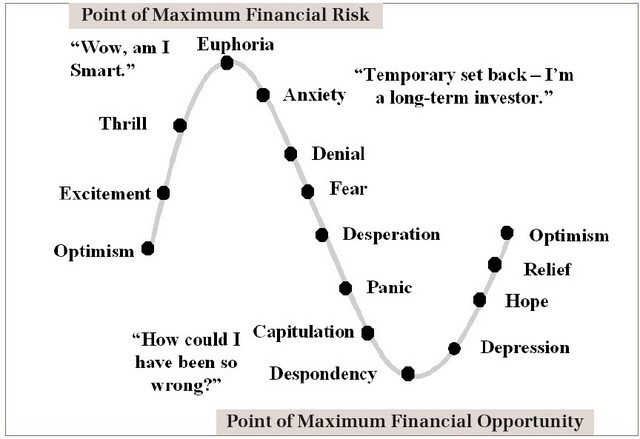
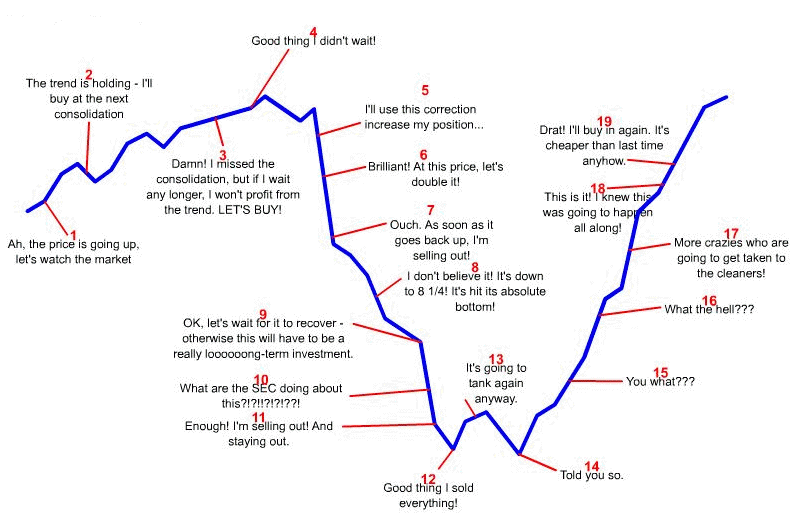
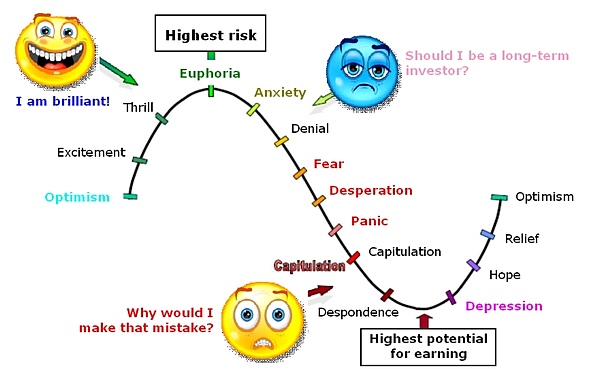
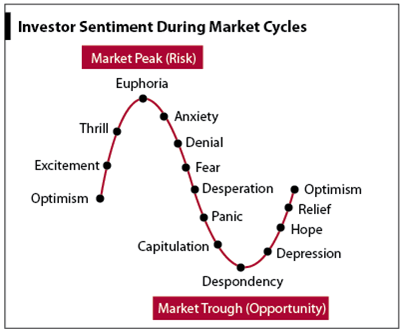
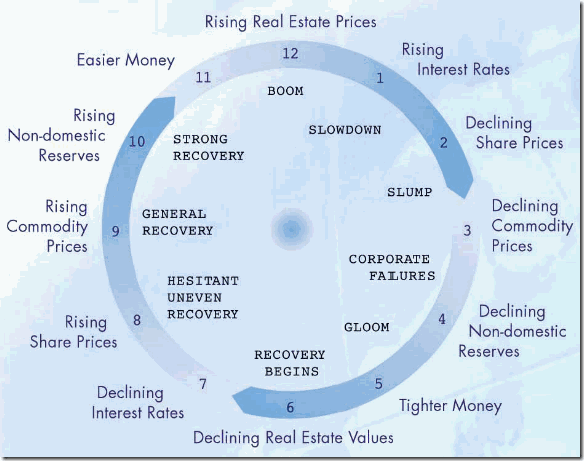
Psy Cycle (Updated)
Psy Cycle (Updated):


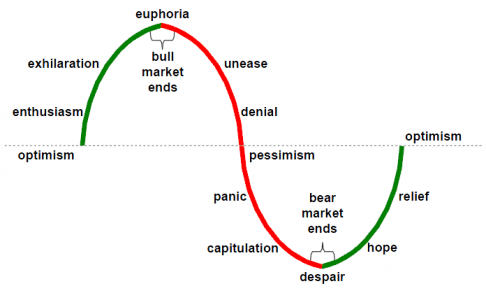
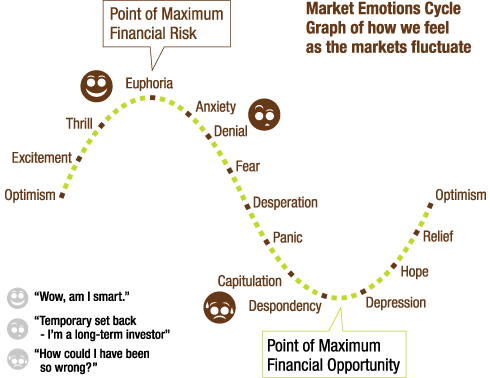
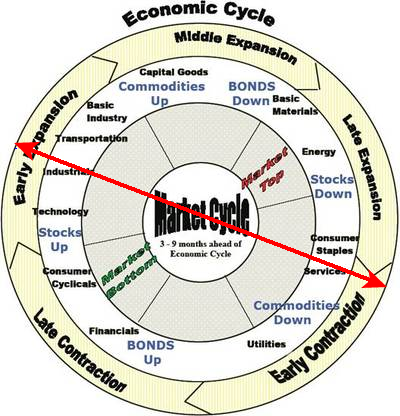
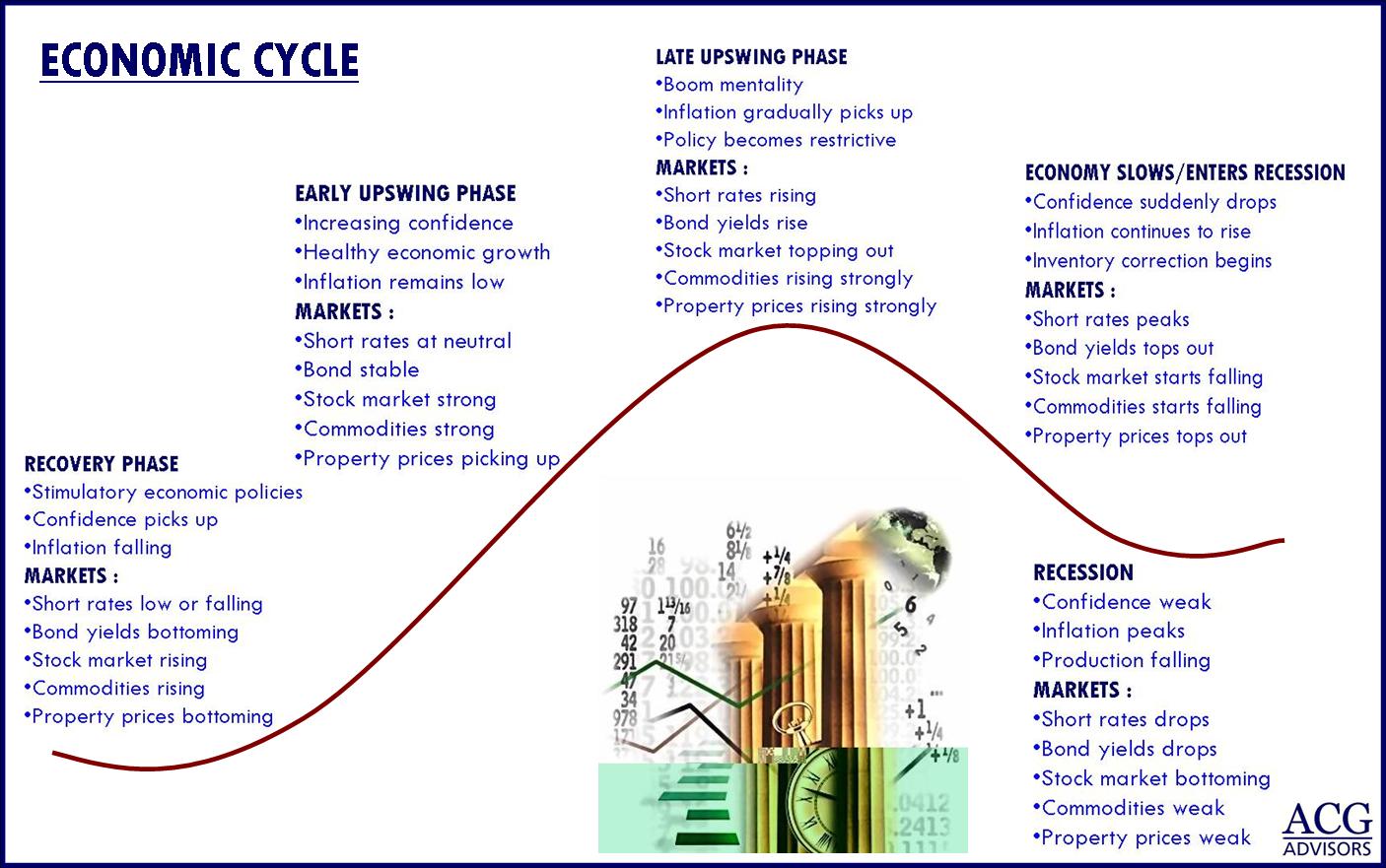
Our favorite collection of sentiment cycle charts — updated . . .
>
~~~

~~~
~~~
~~~
~~~
~~~
~~~
 ~~~
~~~
 ~~~
~~~
 ~~~
~~~
THE MESSENGER OF CHANGING TIMES…
THE MESSENGER OF CHANGING TIMES…:
Here are some deep thoughts from the great Richard Russell that will give the bears something to chew on for a while:
“I talked with my good friend, Joe Granville, over the weekend, and Joe is as bearish as I’ve ever seen or heard him, based on his OBV volume figures. This checks with my own work and studies.
While fundamentalists scour the news for indications of bullish news, the internals of the stock market continue to deteriorate. Even the action of the stock market is bearish as the market rallies on dull volume but declines on higher volume. Furthermore, rising breadth is narrow on rallies while declining breadth is broad when the market heads down.
I don’t know what more I can do or say to convinced subscribers that we are seeing the resumption of the bear market. This means that we should be OUT of all stocks. As for gold mining stocks, this is a personal choice. In due time, I expect gold to fully express itself with a huge upside blow-off. At that time I expect gold mining stocks to follow, but between now and then gold mining shares will probably be hit like every thing else by the fury of the bear market.
I should add that I am expecting this bear market to be far worse than most people expect or are prepared for. The fact is that I don’t believe that Americans expect any thing more than a temporary spate of difficult times, an annoying patch that should be over in a year or so. This is not what I am expecting or predicting.
Once the Dow breaks under 10,000, I believe that the analysts and the PUBLIC will become frightened and start to cut back on their buying. The newspapers will halt their bullish stance, and a great stillness will envelope that land. That stillness will be the result of shock as it dawns on Americans that they are seeing something far different than what they were expecting.
By the way, the Dow is now trading below its 200-day moving average, which stands at 11,938. The 50-day MA is bearishly below the 200-day MA (50-day is 11,811).
Spiritual — While in rehab and after my hip operation I had a lot of time to think. And I wondered why I was still alive. I had survived combat in World War II. I had survived two heart attacks and a stroke. I had survived a mastoid infection and operation. I had survived 50 years of riding motorcycles with one dangerous crash. I had survived two divorces. I have survived (and believe me it was survival) a severely autistic daughter who almost drove me mad. I have survived the years, since I will be 88 (the Chinese lucky number is 8).
So why, I ask myself, am I still here with my brain still functioning. My conclusion, arrived at after a lot of hard thinking, is that I’m supposed to be the messenger of changing times. I have 8,034 subscribers. What percentage of these ladies and gentlemen take me seriously and follow my advice, and what percentage of this group think I am a self-opinionated loonie I don’t know.
In other words, some body wants me to hang around. I know this based on e-mails and kind letters I have received from many subscribers. My advice over the years on gold and various bull and bear markets has resulted in changing some lives for the better. Which is a source of great satisfaction to me.
So that’s my story. I’m afraid it may sound prideful or mystical, but it is what I think, and when a man is 87 years old, he’s long past the need or the desire to lie. “
Messenger of changing times sounds more like the messenger of doom….Let’s hope Richard Russell is wrong. Unfortunately, it’s hard to ignore a man with more market cycles under his belt than just about anyone around….
Source: Dow Theory Letters
Occupy Our Minds: To Empower Ourselves, We Need to Plug the 7 Holes In Our Heads
Occupy Our Minds: To Empower Ourselves, We Need to Plug the 7 Holes In Our Heads:


We need to Occupy our own minds before we can become empowered.
Specifically, people all have built-in bugs in our brains. If we learn to spot them,we will be able to think in more powerful ways an become more successful in our lives (including doing better as investors).
Bug Number 1: Forgetting that We Don’t Live in Tribes
I noted last year:
Biologists and sociologists tell us that our brains evolved in small groups or tribes.
As one example of how profoundly the small-group environment affected our brains, Daily Galaxy points out:
Research shows that one of the most powerful ways to stimulate more buying is celebrity endorsement. Neurologists at Erasmus University in Rotterdam report that our ability to weigh desirability and value doesn’t function normally if an item is endorsed by a well-known face. This lights up the brain’s dorsal claudate nucleus, which is involved in trust and learning. Areas linked to longer-term memory storage also fire up. Our minds overidentify with celebrities because we evolved in small tribes. If you knew someone, then they knew you. If you didn’t attack each other, you were probably pals.
Our minds still work this way, giving us the idea that the celebs we keep seeing are our acquaintances. And we want to be like them, because we’ve evolved to hate being out of the in-crowd. Brain scans show that social rejection activates brain areas that generate physical pain, probably because in prehistory tribal exclusion was tantamount to a death sentence. And scans by the National Institute of Mental Health show that when we feel socially inferior, two brain regions become more active: the insula and the ventral striatum. The insula is involved with the gut-sinking sensation you get when you feel that small. The ventral striatum is linked to motivation and reward.
In small groups, we knew everyone extremely well. No one could really fool us about what type of person they were, because we had grown up interacting with them for our whole lives.
If a tribe member dressed up and pretended he was from another tribe, we would see it in a heart-beat. It would be like seeing your father in a costume: you would recognize him pretty quickly, wouldn’t you.
As the celebrity example shows, our brains can easily be fooled by people in our large modern society when we incorrectly ascribe to them the role of being someone we should trust.
As the celebrity example shows, our brains can easily be fooled by people in our large modern society when we incorrectly ascribe to them the role of being someone we should trust.
The opposite is true as well. The parts of our brain that are hard-wired to quickly recognize “outside enemies” can be fooled in our huge modern society, when it is really people we know dressed up like the “other team”.
***
Our brains assume that we can tell truth from fiction, because they evolved in very small groups where we knew everyone extremely well, and usually could see for ourselves what was true.
On the other side of the coin, a tribal leader who talked a good game but constantly stole from and abused his group would immediately be kicked out or killed. No matter how nicely he talked, the members of the tribe would immediately see what he was doing.
But in a country of hundreds of millions of people, where the political class is shielded from the rest of the country, people don’t really know what our leaders are doing with most of the time. We only see them for a couple of minutes when they are giving speeches, or appearing in photo ops, or being interviewed. It is therefore much easier for a wolf in sheep’s clothing to succeed than in a small group setting.
Indeed, sociopaths would have been discovered very quickly in a small group. But in huge societies like our’s, they can rise to positions of power and influence.
As with the celebrity endorsement example, our brains are running programs which were developed for an environment (a small group) we no longer live in, and so lead us astray.
Like the blind spot in our rear view mirror, we have to learn to compensate and adapt for our imperfections, or we may get clobbered.
Grow Up
The good news is that we can evolve.
While our brains have many built-in hardwired ways of thinking and processing information, they are also amazingly “plastic“. We can learn and evolve and overcome our hardwiring – or at least compensate for our blind spots.
We are not condemned to being led astray by Madison Avenue advertisers and ruthless dictators and scientific frauds and fundamentalists.
We can choose to grow up as a species and reclaim our power to decide our own future.
Bug Number 2: Assuming that the Super-Elite Are “Like Us”
I noted last year:
Vanderbilt researchers have found that the brains of psychopaths have the dopamine abnormality creates a drive for rewards at any cost, and causing them to ignore risks.
As PhysOrg writes:
Abnormalities in how the nucleus accumbens, highlighted here, processes dopamine have been found in individuals with psychopathic traits and may be linked to violent, criminal behavior. Credit: Gregory R.Samanez-Larkin and Joshua W. Buckholtz
The brains of psychopaths appear to be wired to keep seeking a reward at any cost, new research from Vanderbilt University finds. The research uncovers the role of the brain’s reward system in psychopathy and opens a new area of study for understanding what drives these individuals.
“This study underscores the importance of neurological research as it relates to behavior,” Dr. Francis S. Collins, director of the National Institutes of Health, said. “The findings may help us find new ways to intervene before a personality trait becomes antisocial behavior.”
The results were published March 14, 2010, in Nature Neuroscience.
“Psychopaths are often thought of as cold-blooded criminals who take what they want without thinking about consequences,” Joshua Buckholtz, a graduate student in the Department of Psychology and lead author of the new study, said. “We found that a hyper-reactive dopamine reward system may be the foundation for some of the most problematic behaviors associated with psychopathy, such as violent crime, recidivism and substance abuse.”
Previous research on psychopathy has focused on what these individuals lack—fear, empathy and interpersonal skills. The new research, however, examines what they have in abundance—impulsivity, heightened attraction to rewards and risk taking. Importantly, it is these latter traits that are most closely linked with the violent and criminal aspects of psychopathy.
“There has been a long tradition of research on psychopathy that has focused on the lack of sensitivity to punishment and a lack of fear, but those traits are not particularly good predictors of violence or criminal behavior,” David Zald, associate professor of psychology and of psychiatry and co-author of the study, said. “Our data is suggesting that something might be happening on the other side of things. These individuals appear to have such a strong draw to reward—to the carrot—that it overwhelms the sense of risk or concern about the stick.”
To examine the relationship between dopamine and psychopathy, the researchers used positron emission tomography, or PET, imaging of the brain to measure dopamine release, in concert with a functional magnetic imaging, or fMRI, probe of the brain’s reward system.
“The really striking thing is with these two very different techniques we saw a very similar pattern—both were heightened in individuals with psychopathic traits,” Zald said.
Study volunteers were given a personality test to determine their level of psychopathic traits. These traits exist on a spectrum, with violent criminals falling at the extreme end of the spectrum. However, a normally functioning person can also have the traits, which include manipulativeness, egocentricity, aggression and risk taking.
In the first portion of the experiment, the researchers gave the volunteers a dose of amphetamine, or speed, and then scanned their brains using PET to view dopamine release in response to the stimulant. Substance abuse has been shown in the past to be associated with alterations in dopamine responses. Psychopathy is strongly associated with substance abuse.
“Our hypothesis was that psychopathic traits are also linked to dysfunction in dopamine reward circuitry,” Buckholtz said. “Consistent with what we thought, we found people with high levels of psychopathic traits had almost four times the amount of dopamine released in response to amphetamine.”
In the second portion of the experiment, the research subjects were told they would receive a monetary reward for completing a simple task. Their brains were scanned with fMRI while they were performing the task. The researchers found in those individuals with elevated psychopathic traits the dopamine reward area of the brain, the nucleus accumbens, was much more active while they were anticipating the monetary reward than in the other volunteers.
“It may be that because of these exaggerated dopamine responses, once they focus on the chance to get a reward, psychopaths are unable to alter their attention until they get what they’re after,” Buckholtz said. Added Zald, “It’s not just that they don’t appreciate the potential threat, but that the anticipation or motivation for reward overwhelms those concerns.”
Has anyone tested the heads of the too big to fails for this dopamine abnormality?
What are the odds that they have it? And if they have it, what are the odds that they will voluntarily start acting responsibly, especially given the broken incentive system?
Experts also tell us that many politicians also share traits with serial killers. Specifically, the Los Angeles Times noted in 2009:
Using his law enforcement experience and data drawn from the FBI’s behavioral analysis unit, Jim Kouri has collected a series of personality traits common to a couple of professions.
Kouri, who’s a vice president of the National Assn. of Chiefs of Police, has assembled traits such as superficial charm, an exaggerated sense of self-worth, glibness, lying, lack of remorse and manipulation of others.
These traits, Kouri points out in his analysis, are common to psychopathic serial killers.
But — and here’s the part that may spark some controversy and defensive discussion — these traits are also common to American politicians. (Maybe you already suspected.)
Yup. Violent homicide aside, our elected officials often show many of the exact same character traits as criminal nut-jobs, who run from police but not for office.
Kouri notes that these criminals are psychologically capable of committing their dirty deeds free of any concern for social, moral or legal consequences and with absolutely no remorse.
“This allows them to do what they want, whenever they want,” he wrote. “Ironically, these same traits exist in men and women who are drawn to high-profile and powerful positions in society including political officeholders.”
***”While many political leaders will deny the assessment regarding their similarities with serial killers and other career criminals, it is part of a psychopathic profile that may be used in assessing the behaviors of many officials and lawmakers at all levels of government.”
As Jim Quinn wrote last month:
When their bets came up craps, they had the gall to hold the American people hostage for trillions in bailouts. Their fellow psychopaths in Congress gladly forked over the money. Rather than mend their ways, these evil men have returned to their excessive risk taking and continue to pay themselves billions in compensation, while the American middle class is smothered to death under mountains of debt. These evil Wall Street geniuses have shown no remorse as seven million people have lost their jobs and millions more have lost their homes due to the greed and avarice displayed on an epic scale.
Wall Street bankers exhibit the epitome of psychopathic behavior, showing lack of empathy and remorse, shallow emotions, egocentricity, and deceptiveness. Psychopaths are highly prone to antisocial behavior and abusive treatment of others. Though lacking empathy and emotional depth, they often manage to pass themselves off as average individuals by feigning emotions. These Wall Street bankers will never willingly accept responsibility for their actions. They continue to use their wealth and power to control the politicians in Washington DC and the misinformation propagated by the corporate media they control. They own and control the Federal Reserve and will print money until the whole system collapses in a spectacular implosion that destroys our financial system. They only care about their own wealth, influence and status. They have no shame.
Studies also show that the wealthy are less empathic than those with more modest wealth, and so:
The idea of nobless oblige or trickle-down economics, certain versions of it, is bull,” Keltner added. “Our data say you cannot rely on the wealthy to give back. The ‘thousand points of light’—this rise of compassion in the wealthy to fix all the problems of society—is improbable, psychologically.”
Those in the upper-class tend to hoard resources and be less generous than they could be.
Given that many in Congress and top government posts are multi-millionaires, the study might help explain why politicians seem only to work to make themselves wealthier and to help their wealthy buddies.
We will remain disempowered if we assume that the super-elites are “like us”. Unless we learn to spot “wolves in sheep’s clothing”, we will continue to fall prey to their scams.
This is not to say that all rich or powerful people are psychopaths. There are some great men and women who are affluent or who serve in Washington, D.C. But many do have psycopathic tendencies.
Bug Number 3: Falling for the Big Fib
People are also wired to believe our leaders’ big statements, even if they are ridiculous:
As Adolph Hitler wrotein Mein Kampf:
All this was inspired by the principle–which is quite true in itself–that in the big lie there is always a certain force of credibility; because the broad masses of a nation are always more easily corrupted in the deeper strata of their emotional nature than consciously or voluntarily; and thus in the primitive simplicity of their minds they more readily fall victims to the big lie than the small lie, since they themselves often tell small lies in little matters but would be ashamed to resort to large-scale falsehoods. It would never come into their heads to fabricate colossal untruths, and they would not believe that others could have the impudence to distort the truth so infamously. Even though the facts which prove this to be so may be brought clearly to their minds, they will still doubt and waver and will continue to think that there may be some other explanation. For the grossly impudent lie always leaves traces behind it, even after it has been nailed down, a fact which is known to all expert liars in this world and to all who conspire together in the art of lying.
Similarly, Hitler’s propaganda minister, Joseph Goebbels, wrote:
That is of course rather painful for those involved. One should not as a rule reveal one’s secrets, since one does not know if and when one may need them again. The essential English leadership secret does not depend on particular intelligence. Rather, it depends on a remarkably stupid thick-headedness. The English follow the principle that when one lies, one should lie big, and stick to it. They keep up their lies, even at the risk of looking ridiculous.
Science has now helped to explain why the big lie is effective.
As I’ve previously pointed out in another context:
Psychologists and sociologists show us that people will rationalize what their leaders are doing, even when it makes no sense ….
Sociologists from four major research institutions investigated why so many Americans believed that Saddam Hussein was behind 9/11, years after it became obvious that Iraq had nothing to do with 9/11.
The researchers found, as described in an article in the journal Sociological Inquiry (and re-printed by Newsweek):
- Many Americans felt an urgent need to seek justification for a war already in progress
- Rather than search rationally for information that either confirms or disconfirms a particular belief, people actually seek out information that confirms what they already believe.
- “For the most part people completely ignore contrary information.”
- “The study demonstrates voters’ ability to develop elaborate rationalizations based on faulty information”
- People get deeply attached to their beliefs, and form emotional attachments that get wrapped up in their personal identity and sense of morality, irrespective of the facts of the matter.
- “We refer to this as ‘inferred justification, because for these voters, the sheer fact that we were engaged in war led to a post-hoc search for a justification for that war.
- “People were basically making up justifications for the fact that we were at war”
- “They wanted to believe in the link [between 9/11 and Iraq] because it helped them make sense of a current reality. So voters’ ability to develop elaborate rationalizations based on faulty information, whether we think that is good or bad for democratic practice, does at least demonstrate an impressive form of creativity.
An article yesterday in Alternet discussing the Sociological Inquiry article helps us to understand that the key to people’s active participation in searching for excuses for actions by the big boys is fear:
Subjects were presented during one-on-one interviews with a newspaper clip of this Bush quote: “This administration never said that the 9/11 attacks were orchestrated between Saddam and al-Qaeda.”The Sept. 11 Commission, too, found no such link, the subjects were told.
“Well, I bet they say that the commission didn’t have any proof of it,” one subject responded, “but I guess we still can have our opinions and feel that way even though they say that.”
Reasoned another: “Saddam, I can’t judge if he did what he’s being accused of, but if Bush thinks he did it, then he did it.”
Others declined to engage the information at all. Most curious to the researchers were the respondents who reasoned that Saddam must have been connected to Sept. 11, because why else would the Bush Administration have gone to war in Iraq?
The desire to believe this was more powerful, according to the researchers, than any active campaign to plant the idea.
Such a campaign did exist in the run-up to the war…
He won’t credit [politicians spouting misinformation] alone for the phenomenon, though.
“That kind of puts the idea out there, but what people then do with the idea … ” he said. “Our argument is that people aren’t just empty vessels. You don’t just sort of open up their brains and dump false information in and they regurgitate it. They’re actually active processing cognitive agents”…
The alternate explanation raises queasy questions for the rest of society.
“I think we’d all like to believe that when people come across disconfirming evidence, what they tend to do is to update their opinions,” said Andrew Perrin, an associate professor at UNC and another author of the study…
“The implications for how democracy works are quite profound, there’s no question in my mind about that,” Perrin said. “What it means is that we have to think about the emotional states in which citizens find themselves that then lead them to reason and deliberate in particular ways.”
Evidence suggests people are more likely to pay attention to facts within certain emotional states and social situations. Some may never change their minds. For others, policy-makers could better identify those states, for example minimizing the fear that often clouds a person’s ability to assess facts …
The Alternet article links to a must-read interview with psychology professor Sheldon Solomon, who explains:
A large body of evidence shows that momentarily [raising fear of death], typically by asking people to think about themselves dying, intensifies people’s strivings to protect and bolster aspects of their worldviews, and to bolster their self-esteem. The most common finding is that [fear of death] increases positive reactions to those who share cherished aspects of one’s cultural worldview, and negative reactions toward those who violate cherished cultural values or are merely different.
I would argue that the fact that the governments of the world have given trillions to the giant banks has invoked the same mental process – and susceptibility to propaganda -as the war in Iraq.
Specifically, many people assume that because the government has launched a war to prop up the giant banks, it must have a good reason for doing so.
Why else would trillions in taxpayer dollars be thrown at the giant banks? Why else would the government say that saving the big boys is vital?
And I would argue that the fear of another Great Depression (an economic death, if you will) is analogous to the fear of death triggered in many Americans by 9/11.
This creates a regression towards old-fashioned thinking about such things as banks and the financial system, even though the giant banks actually do very little traditional banking these days.
In other words, the big lie appears to be as effective in financial as in military warfare.
Bug Number 4: The Urge to Defend Bad Systems
Psychiatrist Peter Zafirides, M.D sent me an excellent article explaining why good people defend bad systems:
From the bust of the housing bubble and mortgage meltdown to Bernie Madoff and Jerry Sandusky, to political candidates and campaigns, it seems not a week goes by before another story of corruption and scandal breaks. And very predictably, the following questions always seem to follow:
“How could they get away with this?”
- or -
“Why didn’t someone say or do anything about it?”
In trying to answer these questions, we have to first understand a bit about both individual and group psychology. The answers may potentially surprise or frighten you, but it is through this understanding, that any real (and lasting) change can occur. Beyond these obvious questions lies another stark reality: good people tend to continue to defend bad systems.
Why does this happen? What is going on here?
Why do we stick up for a system or institution we live in—a government, company, or marriage—even when anyone else can see it is failing miserably? Why do we resist change even when the system is corrupt or unjust? A new article in Current Directions in Psychological Science, reveals the conditions under which we’re motivated to defend the status quo—a psychological process called “system justification.”
The Power of the Status Quo
In system justification theory, people are motivated to defend the status quo. There is a need to see it as being good, just and/or legitimate. People not only want to hold a favorable view of themselves and the groups they associate with, but they also hold favorable views of an entire, overarching social system. There is a lot at stake here on an individual psychological level that may not have anything to do with the particular candidate, or government or social issue.
There are consequences for trying to buck the system. What will happen if you try to introduce a different type of political or economic system? You tend to be mocked, marginalized or completely ignored. People need to believe that the systems they believe in are legitimate. But this can cause bias and very dangerous blind spots when it comes to the issue of corruption in these systems.
“Now this is not the same as acquiescence,” says Aaron C. Kay, a psychologist at Duke University, who co-authored the paper with University of Waterloo graduate student Justin Friesen. “It’s pro-active. When someone comes to justify the status quo, they also come to see it as what should be.”
According to the research, four particular situations significantly increased the likelihood that system justification would occur:
1. When a threat to the system occurred.
2. When one is dependent on the system.
3. When there is no potential escape from the system.
4. When one has low personal control of their lives.
Threat
When we’re threatened we defend ourselves—and our systems. Before 9/11, for instance, President George W. Bush was sinking in the polls. But as soon as the planes hit the World Trade Center, the president’s approval ratings soared. So did support for Congress and the police. During Hurricane Katrina, America witnessed FEMA’s spectacular failure to rescue the hurricane’s victims. Yet many people blamed those victims for their fate rather than admitting the agency flunked and supporting ideas for fixing it. In times of crisis, say the authors, we want to believe the system works. This bias is real. The problem is, it may not even be consciously in our awareness.
Dependency
We also defend systems we rely on. In one experiment, students made to feel dependent on their university defended a school funding policy—but disapproved of the same policy if it came from the government, which they didn’t perceive as affecting them closely. However, if they felt dependent on the government, they liked the policy originating from it, but not from the school.
Inescapability & Loss of Control
When we feel we can’t escape a system, we adapt. That includes feeling okay about things we might otherwise consider undesirable. The authors note one study in which participants were told that men’s salaries in their country are 20% higher than women’s. Rather than implicate an unfair system, those who felt they couldn’t emigrate chalked up the wage gap to innate differences between the sexes. “You’d think that when people are stuck with a system, they’d want to change it more,” says Kay. But in fact, the more stuck they are, the more likely are they to explain away its shortcomings.
Finally, a related phenomenon: The less control people feel over their own lives, the more they endorse systems and leaders that offer a sense of order.
Change Is Possible!
The research on system justification should not be overwhelming or demoralizing. If anything it can really help to enlighten those who are frustrated when people don’t rise up in what would seem their own best interests. The awareness of this psychological tendency in all of us is the first step in trying to minimize its impact. Awareness is critical if one hopes to meaningfully change systems.
According to Dr. Kay, “If you want to understand how to get social change to happen, you need to understand the conditions that make people resist change and what makes them open to acknowledging that change might be a necessity.” This is true whether the change one desires is individual or societal.
But do not despair! Whether on an individual or societal level, change absolutely happen. Awareness and knowledge is the first part of the process.
Never give up the fight.
Never doubt how truly powerful you are.
Bug Number 5: Apathy
As the CIA notes, public apathy allows government officials to ignore their citizens. While it is easy to slip into apathy, we will as a people be ignored by our politicians unless we remain involved.
Bug Number 6: The Life-Or-Death Struggle to Defend Our Beliefs
Alternet pointed out in June:
When your deepest convictions are challenged by contradictory evidence, your beliefs get stronger.
***
In 2006, Brendan Nyhan and Jason Reifler at The University of Michigan and Georgia State University created fake newspaper articles about polarizing political issues. The articles were written in a way which would confirm a widespread misconception about certain ideas in American politics. As soon as a person read a fake article, researchers then handed over a true article which corrected the first. For instance, one article suggested the United States found weapons of mass destruction in Iraq. The next said the U.S. never found them, which was the truth. Those opposed to the war or who had strong liberal leanings tended to disagree with the original article and accept the second. Those who supported the war and leaned more toward the conservative camp tended to agree with the first article and strongly disagree with the second. These reactions shouldn’t surprise you. What should give you pause though is how conservatives felt about the correction. After reading that there were no WMDs, they reported being even more certain than before there actually were WMDs and their original beliefs were correct.
They repeated the experiment with other wedge issues like stem cell research and tax reform, and once again, they found corrections tended to increase the strength of the participants’ misconceptions if those corrections contradicted their ideologies. People on opposing sides of the political spectrum read the same articles and then the same corrections, and when new evidence was interpreted as threatening to their beliefs, they doubled down. The corrections backfired.
Once something is added to your collection of beliefs, you protect it from harm. You do it instinctively and unconsciously when confronted with attitude-inconsistent information. Just as confirmation bias shields you when you actively seek information, the backfire effect defends you when the information seeks you, when it blindsides you. Coming or going, you stick to your beliefs instead of questioning them. When someone tries to correct you, tries to dilute your misconceptions, it backfires and strengthens them instead. Over time, the backfire effect helps make you less skeptical of those things which allow you to continue seeing your beliefs and attitudes as true and proper.
***
Psychologists call stories like these narrative scripts, stories that tell you what you want to hear, stories which confirm your beliefs and give you permission to continue feeling as you already do.
***
As the psychologist Thomas Gilovich said, “”When examining evidence relevant to a given belief, people are inclined to see what they expect to see, and conclude what they expect to conclude…for desired conclusions, we ask ourselves, ‘Can I believe this?,’ but for unpalatable conclusions we ask, ‘Must I believe this?’”
***
What should be evident from the studies on the backfire effect is you can never win an argument online. When you start to pull out facts and figures, hyperlinks and quotes, you are actually making the opponent feel as though they are even more sure of their position than before you started the debate. As they match your fervor, the same thing happens in your skull. The backfire effect pushes both of you deeper into your original beliefs.
***
The backfire effect is constantly shaping your beliefs and memory, keeping you consistently leaning one way or the other through a process psychologists call biased assimilation. Decades of research into a variety of cognitive biases shows you tend to see the world through thick, horn-rimmed glasses forged of belief and smudged with attitudes and ideologies.
***
Flash forward to 2011, and you have Fox News and MSNBC battling for cable journalism territory, both promising a viewpoint which will never challenge the beliefs of a certain portion of the audience. Biased assimilation guaranteed.
***
The human understanding when it has once adopted an opinion draws all things else to support and agree with it. And though there be a greater number and weight of instances to be found on the other side, yet these it either neglects and despises, or else-by some distinction sets aside and rejects, in order that by this great and pernicious predetermination the authority of its former conclusion may remain inviolate
- Francis Bacon
It is very difficult for anyone to really listen to evidence which contradicts our beliefs. But unless we learn how to grit our teeth and do so, we will forever be victims to the divide-and-conquer game which ensures that we have politicians who will ignore our demands, we will be so wedded to one investment strategy that we will forever lose money on our investments, and we will generally be weak and disempowered people.
Bug Number 7: Fact Overload
People who don’t know much about a subject tend to over-estimate their understanding. Ironically, experts in any subject tend to underestimate their abilities (because the more you know, the more you realize that you don’t know.)
Moreover, people who don’ t much about a subject are more hesitant to learn about it than people who know something about it. (This may be learning a sport or a musical instrument. When you get decent at it, it becomes fun … and learning how to improve is pleasurable. On the other hand, if you make nails-on-chalkboard noises while learning how to play electric guitar or fall alot while you’re learning how to ski, it isn’t as fun … and it is tempting to give up and avoid it if your friends try to “drag you along”. The same dynamic might apply to learning as well.)
If we realize that we are resisting learning new information – either because we assume we already know it all, or because we want to avoid the embarrassment of being a beginner – we will remain stuck where we are, and we will never grow wiser or more powerful. If your mind is already “full”, you can’t fill it any more. Indeed, one of the secrets of really smart people is to adopt a “beginner mind”, so that they are open to learning new information.
Subscribe to:
Posts (Atom)